fnWare:
Minigame Inc.
Creator
My first formal venture in Fortnite Creative. From programming to tech art to even marketing, fnWare: Minigame Inc. is the culmination of my entire arsenal as a game developer.
Conceptualization
The most important decisions for a solo developer happen long before they write their first line of code. Even a well made game can be lost in a sea of similar games or shunned by an uninterested player base. A project is only as successful as its marketing, and I needed to find an achievable market niche.
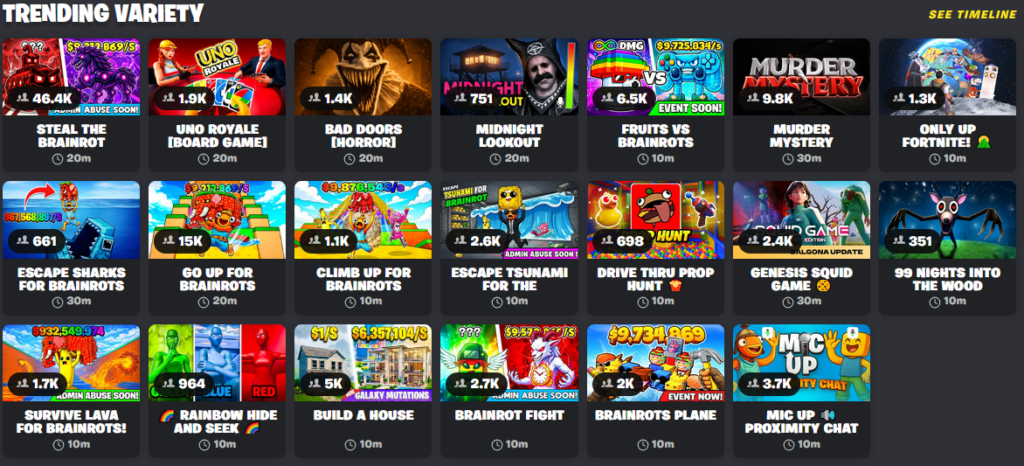
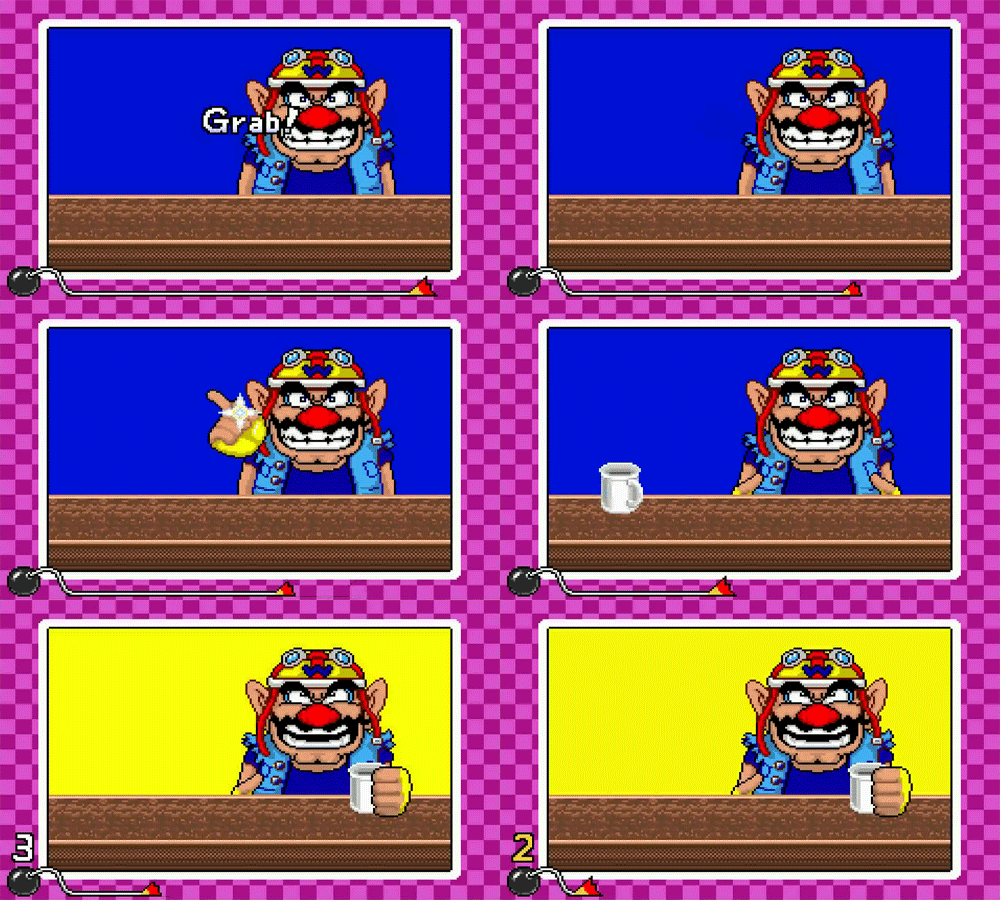
Assessing the competition both on Fortnite Creative and on similar platforms narrowed gave a clear idea on what styles of game typically saw success. Given my personal tastes in custom gamemodes, and my lack of experience in UEFN, I settled on a fast-paced minigame type structure. The market research corroborated this, existing minigame Islands were longer pace and only slightly modified the typical Fortnite playstyle. Much of Fortnite’s competitors, such as Roblox, already had successful fast-paced minigame formats. The path forward was clear. I chose a name that would evoke the gameplay for the Wario Ware franchise while explicitly including ‘minigame’ for the players unfamiliar with Wario Ware.
From UE5 to UEFN
The biggest factor in choosing UEFN as the engine for this project was my previous extensive experience with Unreal Engine. I was unaware of any major differences between the two platforms, and I assumed whatever differences that may exist could be easily surmounted. While some of my assumptions were correct, I had no idea how much of an ordeal this transition would come to be. Learning an entire new programming language, complying with Fortnite’s limited memory, a frankly awful debugging pipeline, and extremely limited prefab content were just some of the major hurdles throughout the project. Despite this, I chose to see the strengths of the engine rather than its shortcomings.
Replacing C++ and Blueprints, Verse was the only option to create any gameplay logic (outside of jerry-rigging a series of Fortnite Devices together). While frustrating at first, the strengths of Verse were invaluable for the flow and scalability for the project. Being able to easily incorporate synchronous and asynchronous methods proved useful. I didn’t have to pad the entire code base with delegates and dispatches. This made tasks like loading and unloading level geometry super easy.
I took an extremely modular approach to designing the minigames, and I’m proud to say that they’re all instance modified versions of one base class, no hardcoding specific minigames. Any verbose logic was broken down into a smaller director who would handle a certain aspect of that particular minigame. If the design of a minigame necessitated players on different teams, the Team Director would handle that. Or the AI Director would manage spawning, tracking and dispatching enemies within that particular minigame. These directors were all instance editable, meaning dozens of unique minigames could be created from scratch without touching a single line of code.
Working within the memory limitations was tough, but it was able to teach me to make the most of my environments and designs. Only one ‘Level’ can exist per Island, so I had to break down the minigames into a series of areas. Each of these areas had interchangeable parts that could be loaded in and out depending on the exact minigame. Spawning also had to be specific and coordinated so that players wouldn’t teleport in before the level loads and that they were spawned in the correct locations.
Pushing Beyond Fortnite
In a market as competitive as this, simply being adequate was never going to be enough. Once the fundamentals were built, I tried pushing the engine beyond its limits, creating the air of professionalism and novelty. With virtually no resources to guide me, I had to conjure these techniques myself.
At the time of development, the newly added Scene Graph suite was highly experimental and unreliable. Despite this, I did my best to leverage the existing tools to create custom AI behavior and Hitboxes.
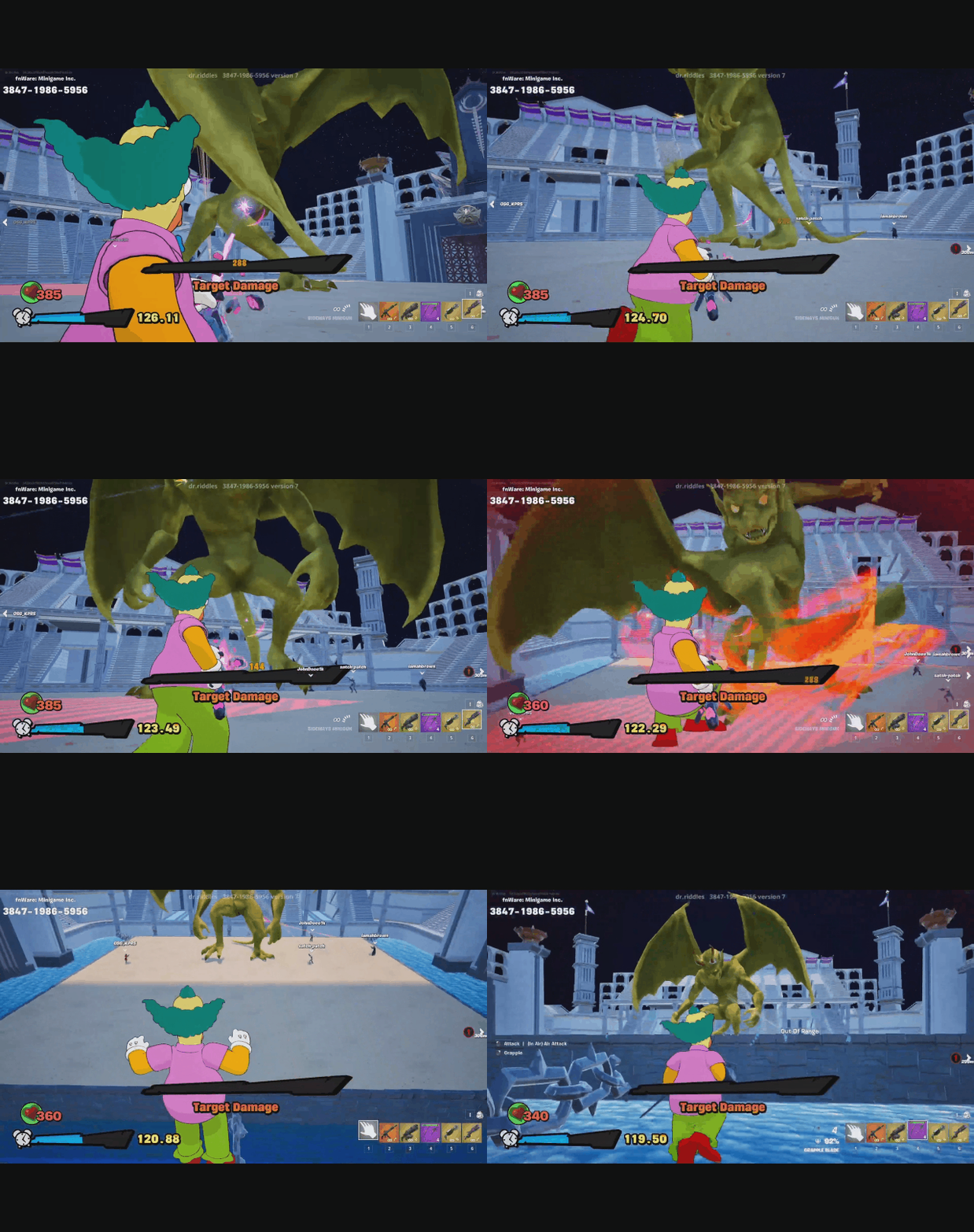
While seemingly simple, UI integration was one of the biggest nightmares in the entire project. For the majority of the development time, any assets made with UMG had virtually no way to properly interface with Verse code, outside of a comedically limited capacity. While I was making the best of what I had, I was saved by the introduction of Verse Fields mere days before launch. This meant that the majority of the UI code had to be scrapped, but verse fields were so relatively empowering that I hardly cared.
fnWare is also one of the few Fortnite Islands to include a completely original soundtrack. While I commissioned the songs themselves, integrating them was no small feat. To accommodate players recently joined players who are still in the lobby and current players in a minigame, I extended Unreal’s Control Bus system to make each song selectively audible depending on the player’s context. I also use custom music players that can loop at custom time-stamps, so songs can have segments that only play the first time you hear them.
Post Mortem (why am I not a FortBillionare yet?)
Despite my targeted approach, and months of my best efforts the project fell short of my expectations. Its hard to completely distill the reason as to why. I will admit that the design could be refined. I found players would often get confused and only figure out the objective too little too late. Being a competitive game, I couldn’t assure everyone wins everytime, and I wrongfully assumed that players would be eager to “run it back” creating an addicting gameplay loop. This was a big surprise to me, how could the playerbase who so often queues right back into a 15 minute Battle Royale after losing be so dejected after losing a 15 second minigame. If I were to take this approach again, I would really have to find the essence of that reaction and figure out what I can do to mitigate it
The elephant that has yet to be addressed is the simple fact that Fortnite Creative is a cruel mistress. Even projects that were backed by famous indie studios and shamelessly astroturfed by Epic themselves can’t ride the Fortnite Creative wave. I thought the lack of UEFN specializing studios was because of the platform’s relative infancy and I had to act fast before everyone found the honey pot. This was naive of me. Even the Fortnite Creative superstars seem to have a difficult time recreating that success on any of their other Islands. To clarify, I don’t think I’m personally entitled to success, I threw my hat into the Fortnite Creative ring because I wrongfully thought it would be easy. While I do think I did a serviceable job of creating a fun, unique and marketable experience, I failed to fully appreciate what a slot-pull finding success would truly be.
Truthfully, I don’t understand the appeal of Fortnite, and I certainly don’t understand the appeal of Fortnite Creative, but I do understand the appeal of UEFN. I honestly had a great time all things considered and I’d go back if conditions in the market change in my favor.
Full Gameplay